Extending the Digital Experience with Trust-Driven E-Commerce
Client: PUR
Role: UX Designer
Team - 3 UX Designers
Focus: UX strategy, e-commerce enablement, trust-driven design, Saas Integration, Innovative Design
Overview
PUR’s website was informative and brand-consistent, but it stopped short of helping users complete a purchase.
This project focused on transforming PUR’s digital experience from an informational site into a decision-support and e-commerce experience, helping users move from uncertainty to confident action in one place.
The Core Problem
This gap surfaced three critical questions users were asking silently:
Is my water actually safe?
Which filter is right for my home?
Can I confidently buy this here without second-guessing my decision later?
Project Goal
Enable a seamless browse → decide → buy experience
Reduce confusion during filter selection
Build trust through transparency and contextual information
Support PUR’s business goal of increasing engagement and conversion
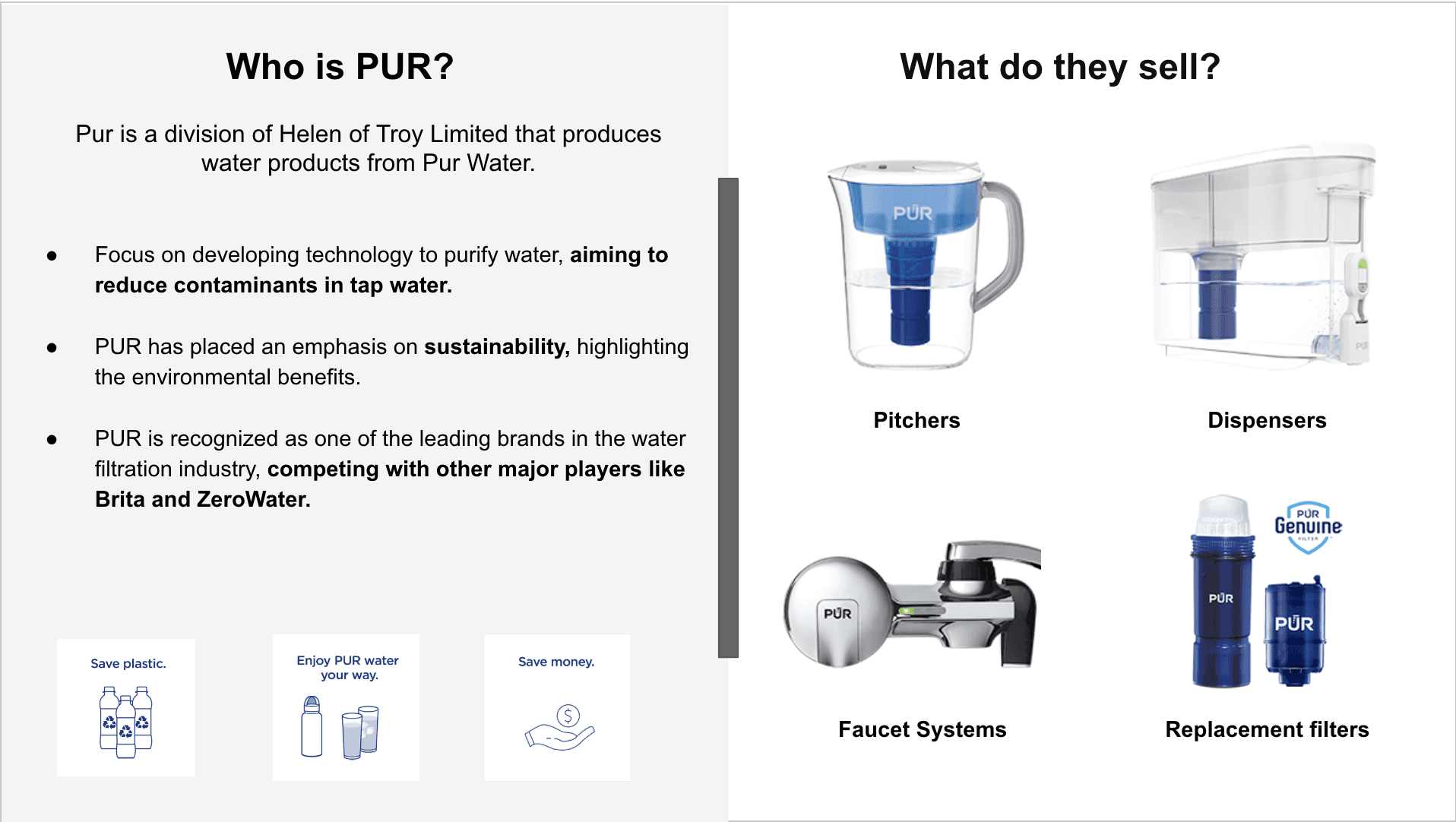
PART 1 : From browsing to Buying
E-commerce Integration
Challenge : Users could explore PUR’s products, but the journey ended at information. Purchasing required leaving the site, breaking momentum and confidence at a critical decision point.
At this stage, the experience supported learning, but not action.
Learn about the product ---> Leave PUR site ---> Compare elsewhere ---> Drop-off
What we did (V1 Approach)
Instead of treating e-commerce as a separate “store,” we designed it as a continuation of the decision journey.
For Version 1, we focused on three core improvements:
Clarifying product categorization to reduce choice overload
Simplifying technical language to lower cognitive effort
Designing a clean transition from learning → recommendation → checkout
Explore---> Understand ---> Get Recommendation ---> Buy
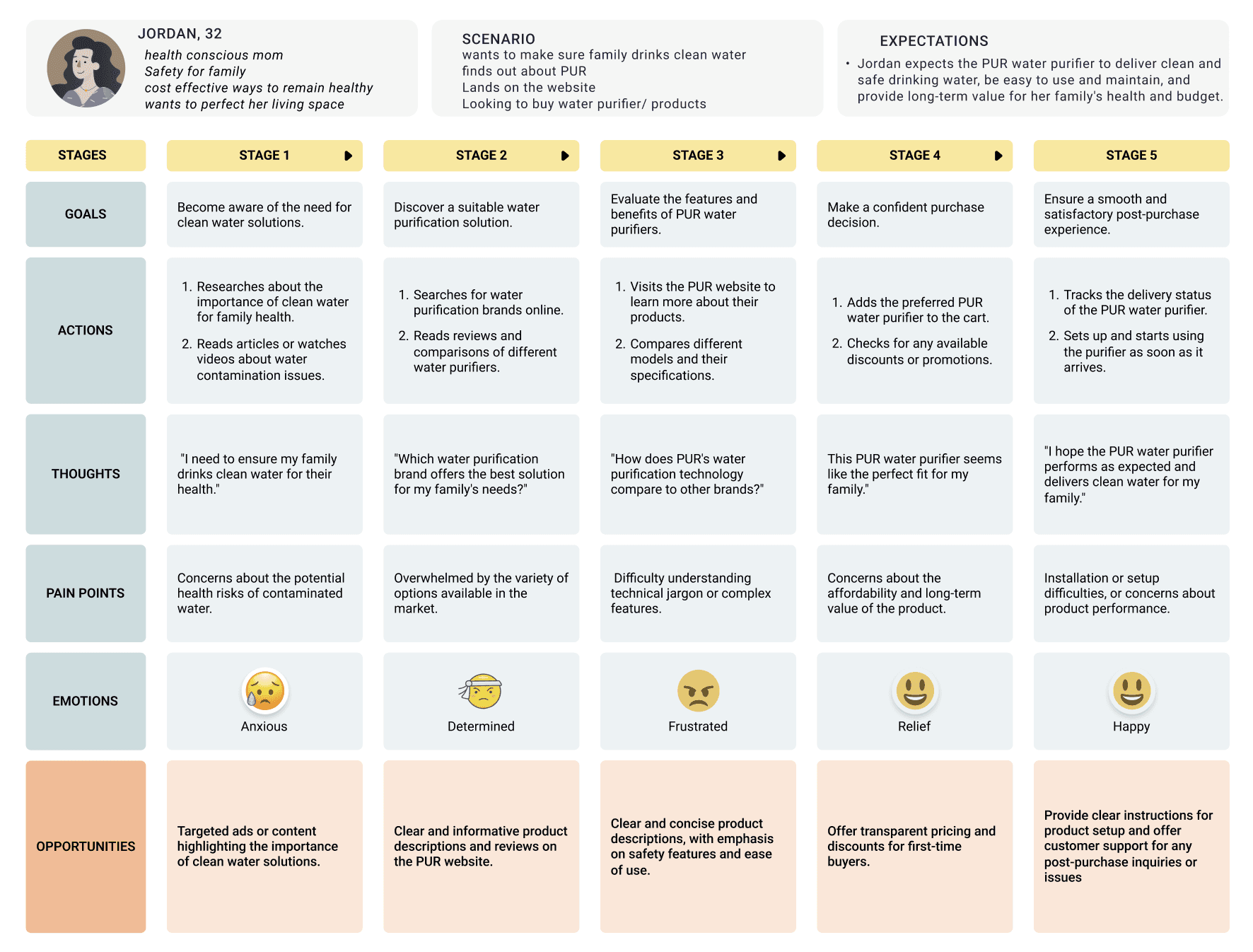
New Purchase flow User Journey Map
E-commerce Integrated Prototype
PART 2 : Making Water Quality Visible
Adding an Innovative Feature
Challenge: Users still weren’t confident what they were buying - or why.
Key design question
How might we make water quality feel personal, understandable, and trustworthy?
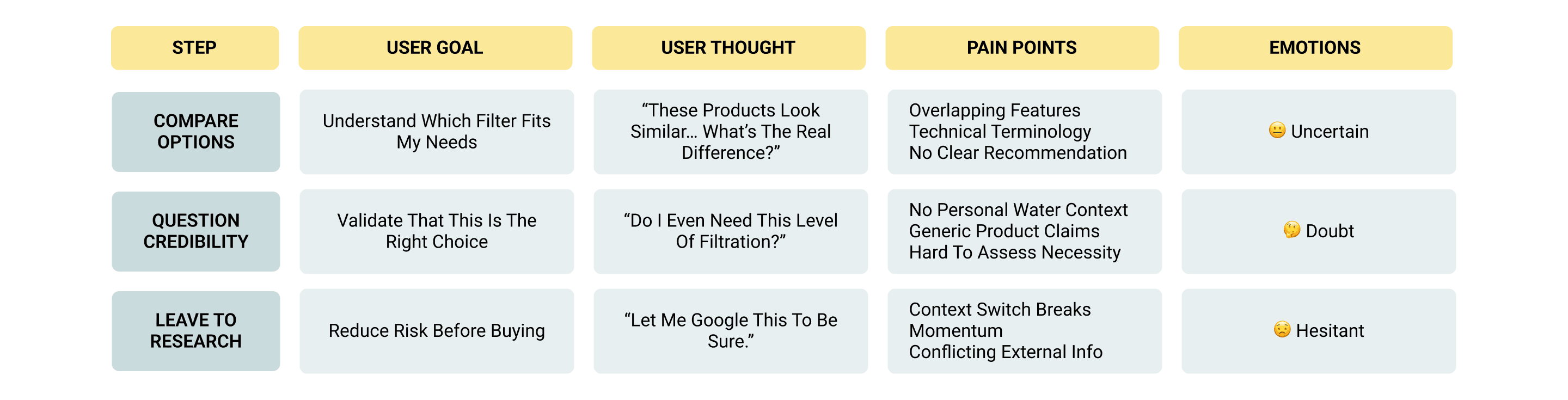
Understanding Where Trust Broke Down
Before introducing solutions, we needed to understand where users were losing confidence during the decision process.
Rather than mapping the entire journey, we intentionally zoomed into the Evaluate stage — the moment where users were actively comparing options and deciding whether to move forward.
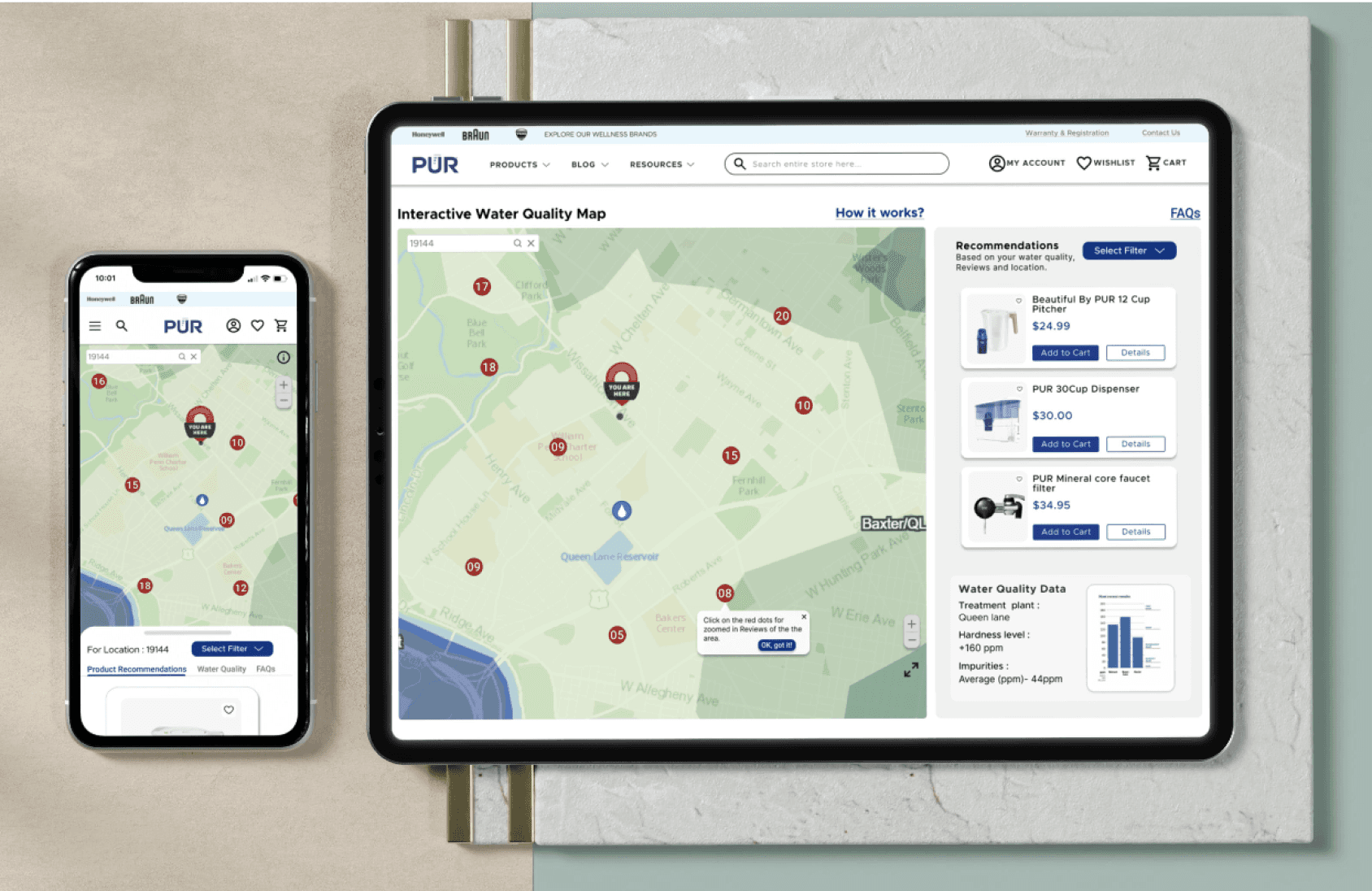
SOLUTION - Eliminating Confusion: Making Water Filter Shopping Simple
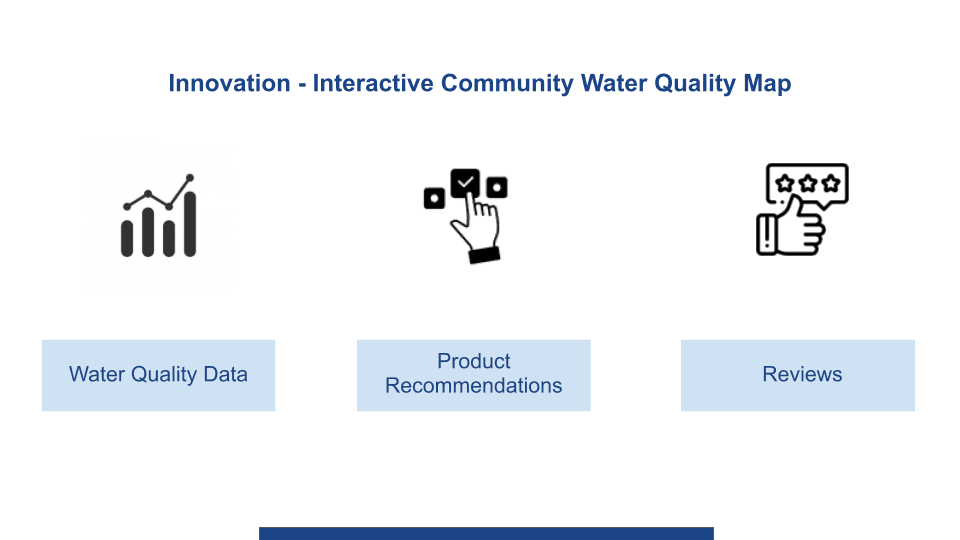
XYZ STATEMENT
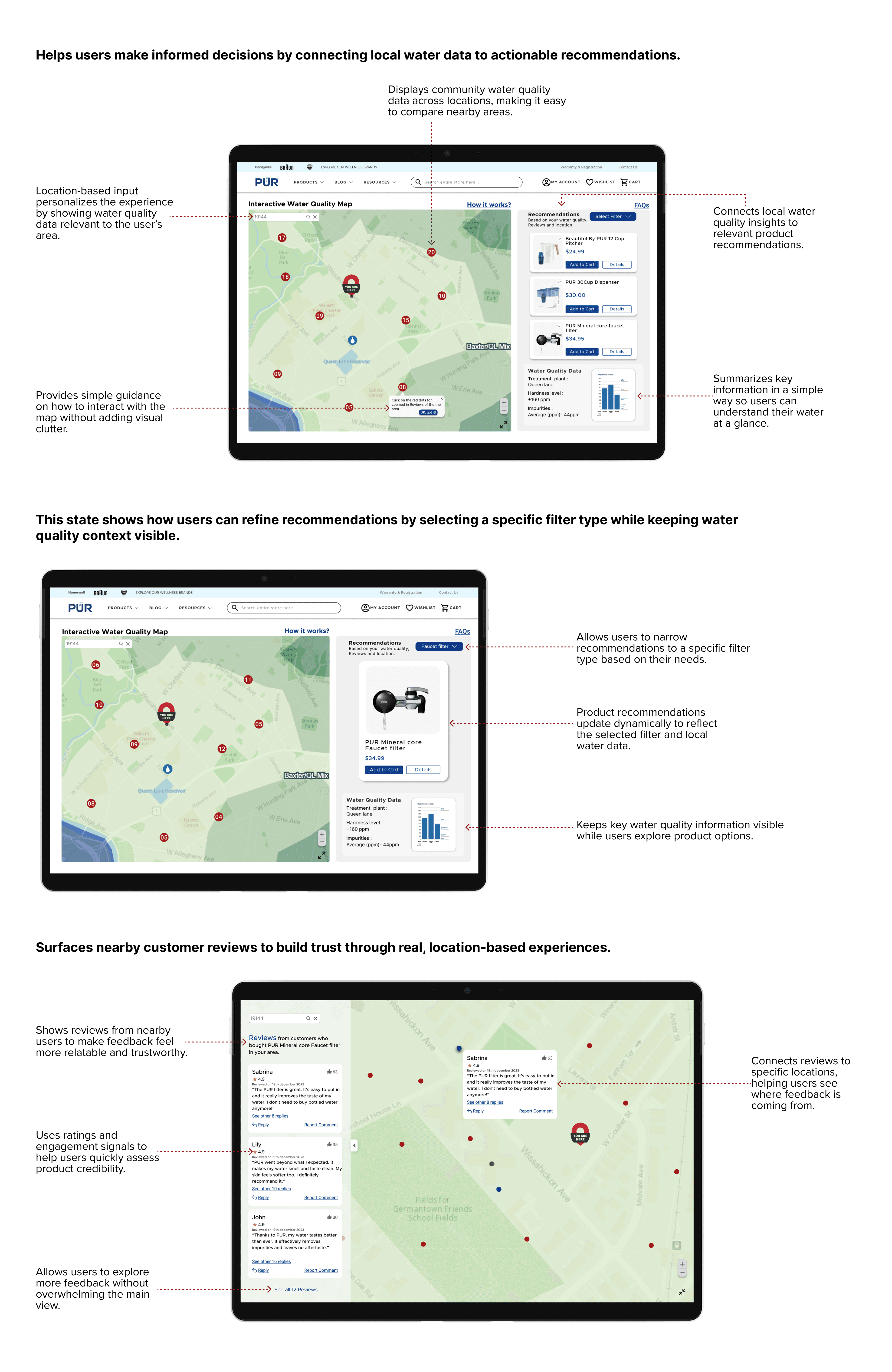
We Help health-conscious individuals make informed decisions about their water filtration needs by offering an interactive community Water Quality Interactive Map that provides real-time data and personalized recommendations based on location.
Enter ZIP--> View Local Water Summary --> Explore Contaminants --> Get Recommendations
Annotated UI screens
PART 3 : Reducing last minute hesitation
Saas Integration
How might we support users at the exact moment of hesitation - without adding friction, complexity, or pressure?
This question reframed the problem from education to reassurance.
Enhancing Support with Live Chat Integration
Improve user experience by streamlining = product selection, installation assistance, and support processes
Increase customer engagement and satisfaction through personalized assistance and seamless integration.
Saas Platform - Livechat
Live chat Features -
Greetings
Use of prompts
Transferring to Human Agent
Default Fallback
Reviews
Conclusion
This project focused on extending PUR’s digital experience to support confident decision-making and purchasing in a health-critical context.
Across the three phases:
Part 1 enabled a complete browse-to-buy journey
Part 2 made water quality visible and locally relevant
Part 3 reduced last-mile hesitation through contextual support
Together, the experience shifted from information delivery to decision support.
Key Takeaway
Trust isn’t built by adding more information - it’s built by helping users feel confident at the right moment.
What’s Next
Next steps would include validating real data sources, measuring conversion behavior, and scaling support with AI-assisted tools.